
Etihad Rail Conducts Historic Trial with Emirati Falconers Ahead of Liwa Station Launch
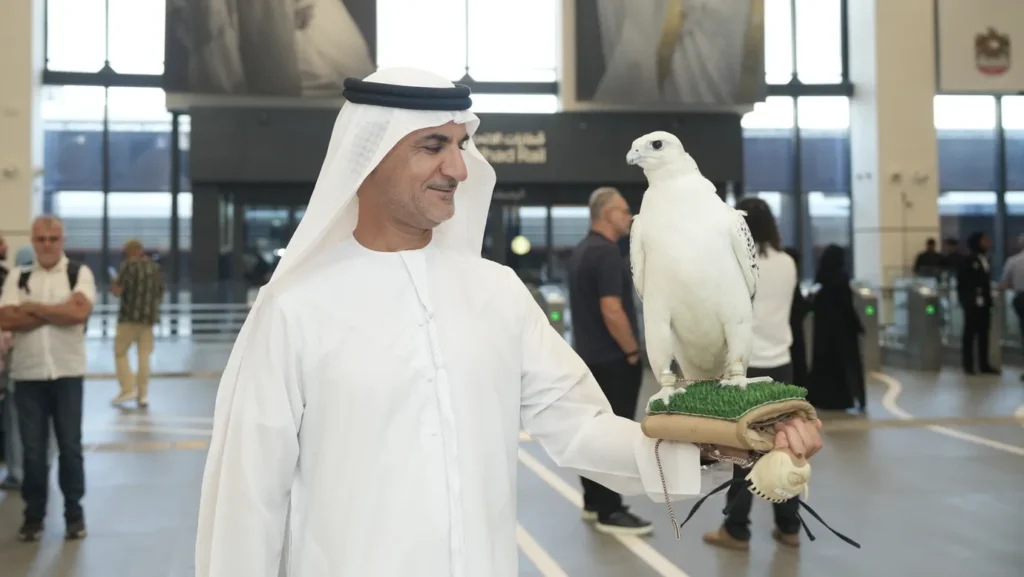
In a pioneering initiative connecting cultural heritage with modern infrastructure, Etihad Rail has hosted a special trial journey transporting Emirati falconers and their birds to test operational procedures ahead of the November 2026 opening of Liwa Station.
Etihad Rail has undertaken a distinctive operational trial, hosting a delegation of Emirati falconers and their falcons aboard a dedicated passenger train travelling from Abu Dhabi to Fujairah. This carefully orchestrated journey represents a considered exploration of how traditional cultural practices might integrate with the UAE’s expanding national rail network, particularly in advance of services commencing to Liwa Station on 30 November 2026.
Testing Operational Procedures
The trial was conceived to evaluate the comprehensive procedures and safety considerations essential for falcon travel within the railway environment. Etihad Rail’s operations, safety and security teams supervised the journey under controlled conditions, examining how falcons might be accommodated within stations and onboard trains whilst maintaining the highest standards of passenger safety and security.
Adhraa Almansoori, Executive Director of Commercial at Etihad Rail Mobility, articulated the initiative’s broader significance: “In line with the UAE leadership’s commitment to preserving the rich national heritage and strengthening its presence across generations, we wanted this experience to reflect the unique cultural identity of the region. We see this initiative as an opportunity to connect the continued development of the UAE’s national mobility ecosystem with our cultural heritage, in a way that celebrates the UAE’s identity while keeping this living legacy as the nation continues to progress.”
Preserving Living Heritage
Falconry occupies a profound place within Emirati cultural identity, receiving particular support from the late Sheikh Zayed bin Sultan Al Nahyan, the Founding Father of the UAE, who championed its preservation and transmission to succeeding generations. The practice has been recognised internationally, appearing on UNESCO’s Representative List of the Intangible Cultural Heritage of Humanity. Notably, the Liwa region maintains exceptionally strong historical connections with falconry and other traditional practices maintained across generations.
Jassim AlHammadi, one of the participating falconers, reflected on the experience: “Falconry is a heritage we learned from our fathers and grandfathers and one that we are committed to passing on to future generations. This experience gave us the opportunity to share our knowledge and expertise in handling falcons with Etihad Rail’s teams.”
Intergenerational Knowledge Transfer
The trial incorporated young participants alongside experienced falconers, deliberately supporting knowledge transfer and ensuring falconry’s continuing presence within Emirati society. The participating falconers provided specialist equipment and handling arrangements essential for falcon welfare throughout the journey.
Currently, passengers must comply with provisions of the Passenger Charter governing pet transportation. Etihad Rail has indicated that insights gathered from this and comparable initiatives will inform future exploration of more suitable and sustainable solutions for animal travel, including falcons, whilst maintaining safety, security and passenger comfort standards.
The Liwa region’s connection to the national railway network will enhance accessibility to its cultural landmarks, heritage attractions and community events, reinforcing the integration of traditional practices within the UAE’s contemporary infrastructure development.
Source: Abu Dhabi Media Office