
UAE Rare Disease Congress urges global sharing of Genome Programme expertise
Delegates at the 4th International UAE Rare Disease Society Congress called for wider use of AI in diagnostics and for the UAE Genome Programme’s findings to be shared internationally to improve outcomes for people with rare conditions.
Calls to share UAE Genome Programme expertise
Participants at the 4th International UAE Rare Disease Society Congress, held at Le Méridien Dubai from 18 to 20 September, urged broader international access to the UAE Genome Programme’s findings and experience. Delegates said the programme’s results could accelerate diagnosis and treatment of hereditary and genetic conditions worldwide if expertise and data are shared with other countries and research centres.
Dr Nuha Al Zaabi, President of the Congress, Consultant in Genetic and Metabolic Disorders and Board Member of the UAE Rare Disease Society, highlighted artificial intelligence’s potential to transform clinical practice by analysing large volumes of medical and genetic data. Delegates suggested that AI could dramatically shorten the diagnostic odyssey for people with rare diseases, in some cases reducing years of uncertainty to minutes.
Practical measures to support patients and families
The Congress emphasised a multi‑stakeholder approach, calling for sustained partnerships between patients, families, healthcare providers, researchers, government entities and the wider community. Delegates pressed for increased financial and logistical support for research into conditions that currently lack effective treatments, and they recommended greater awareness of genetic diseases among physicians, including internal medicine specialists.
Participants called for expanded premarital medical screening, early diagnosis and prevention strategies, and wider adoption of the personal physician model so individuals have continuity of care that can include access to gene therapies where appropriate. Physiotherapy was singled out as essential care that should be available to adults as well as children; delegates urged health insurers to provide coverage for such services given their role in limiting complications.
The Congress also addressed the needs of people of determination, urging the establishment of a dedicated system to ensure rapid access to treatment. Delegates recommended linking the People of Determination card to a comprehensive government platform so that each person’s condition and needs can be identified quickly, reducing administrative burdens on families.
Education policy formed another strand of the discussions. Delegates recommended that schools and authorities accommodate students with rare diseases, offering distance learning when in‑person attendance is impractical and guiding families to the hospitals and centres best placed to treat specific conditions.
The scientific programme covered genetics and genomics, metabolic disorders, premarital genetic screening, precision therapies, AI and research ethics. Its sessions combined clinical updates with practical guidance for families on nutrition, home care and emergency management, while patient panels offered opportunities for experience‑sharing and advocacy.
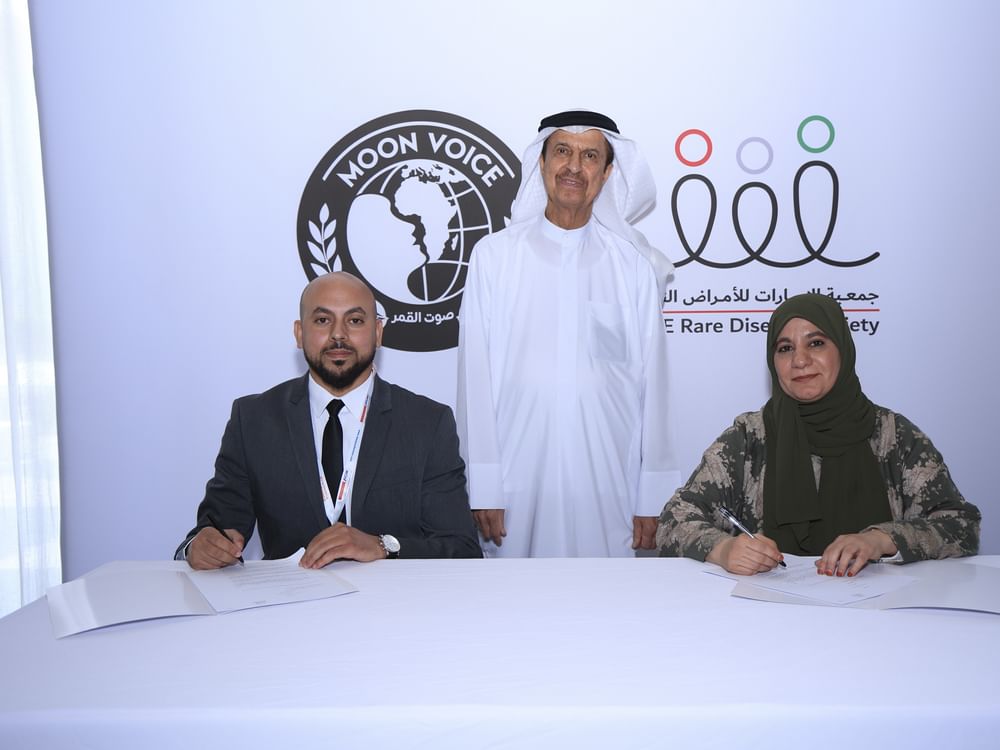
On the sidelines of the Congress, the UAE Rare Disease Society signed a cooperation agreement with Morocco’s Sawt Al Qamar Association, and the event featured a book signing attended by Dr Hussein Al Rand, Assistant Undersecretary for the Public Health Sector at the Ministry of Health and Prevention.
Source: WAM