
UAE Launches Landmark Nutritional Standards Initiative to Reduce Sodium, Sugar and Fat in Food Products
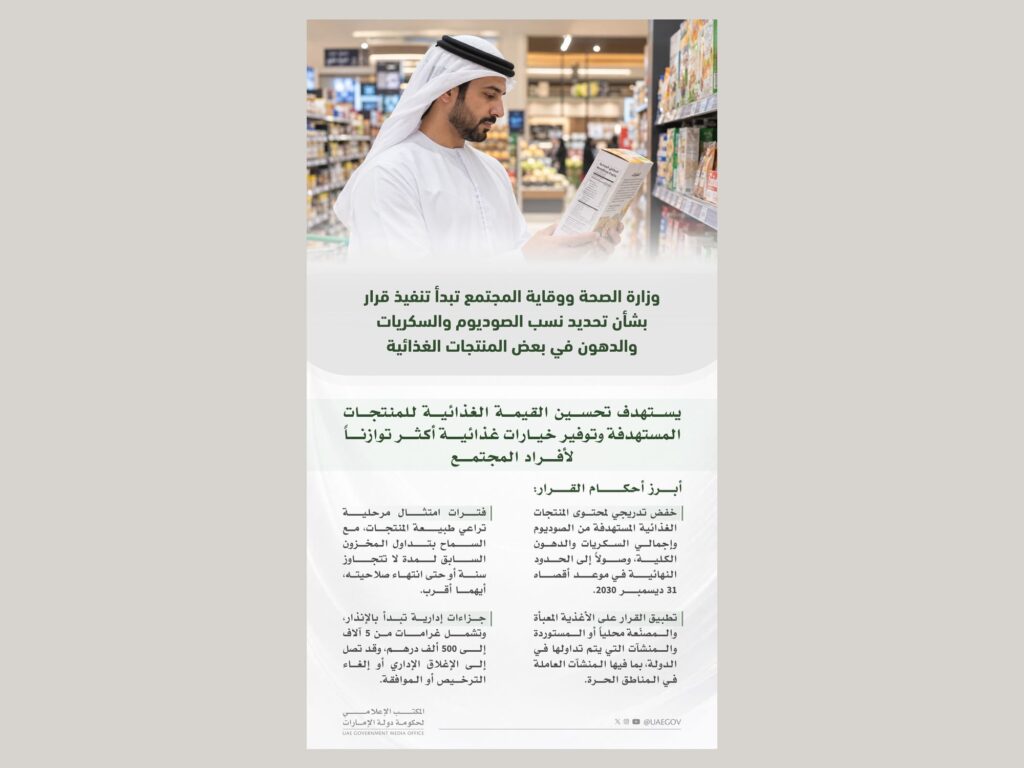
The Ministry of Health and Prevention has begun implementing a comprehensive resolution to gradually reduce unhealthy ingredients in packaged foods, with compliance phases extending through 2030.
The Ministry of Health and Prevention (MoHAP) has commenced implementation of a significant public health resolution establishing maximum limits for sodium, processed sugar and fat across a carefully defined range of food products throughout the United Arab Emirates. This initiative represents a strategic commitment to safeguarding population wellness whilst addressing rising rates of obesity and associated non-communicable diseases.
The resolution creates a national framework that will progressively reduce target ingredients in both locally manufactured and imported packaged foods through clearly delineated phases culminating on 31st December 2030. The comprehensive scope encompasses all stages of the food chain, from production and manufacturing through preparation, processing, packaging, transportation, import, storage, distribution, serving, display and final sale. The framework applies to food establishments and free zones companies handling these products within the Emirates.
Phased Implementation and Specific Targets
The initiative establishes two compliance phases with distinct nutritional benchmarks. For leavened bread, initial phase limits permit 444 milligrammes of sodium, 6 grammes of total sugars and 8.4 grammes of total fat per 100 grammes, reducing to 370 milligrammes of sodium, 5 grammes of sugars and 7 grammes of fat in the final phase. Flat bread faces comparable targets, commencing at 384 milligrammes of sodium.
Sweetened milk beverages and milk alternatives are capped at 9.6 grammes of total sugars initially, declining to 8 grammes by 2030. Flavoured yogurt and laban products face maximum limits of 12 grammes reducing to 10 grammes. Highly salty snacks, including salted crackers, nuts, seeds and extruded products, face significant sodium reductions ranging from 336 to 912 milligrammes depending on category.
Processed cheese represents the second product group, with spreadable varieties limited to 864 milligrammes of sodium initially and 720 milligrammes finally, whilst other cheese types face 1,200 and 1,000 milligramme limits respectively.
Compliance Timelines and Enforcement
First group product establishments must achieve initial phase compliance within nine months, thereafter progressing toward final phase targets. Second group handlers receive extended timelines of two years and three months for first phase achievement. Pre-existing stock manufactured or imported prior to implementation may remain available for up to one year or until expiration, whichever occurs first.
The resolution incorporates provisions permitting limited exceptions where compliance would necessitate reductions exceeding 20 per cent of established ingredient content, subject to ministerial approval. However, exemptions do not extend compliance deadlines beyond the 2030 deadline.
Federal and local health authorities are designated as implementation and monitoring bodies, empowered to enforce compliance through administrative penalties ranging from formal warnings to fines between AED 5,000 and AED 500,000, and potential establishment closure for periods up to six months or licence cancellation for egregious violations.
Source: WAM