
Global thought leaders chart AI’s evolution at Abu Dhabi conference as robotics revolution takes shape
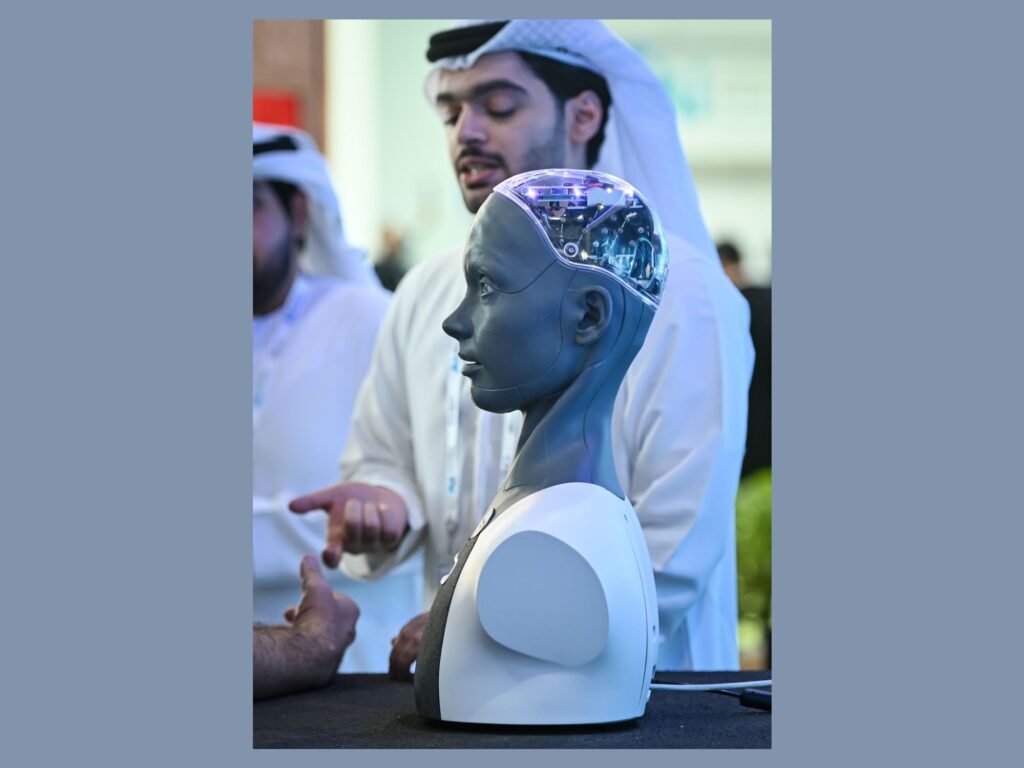
Ai Everything Abu Dhabi 2026 convenes international experts to examine how artificial intelligence and robotics are reshaping workforce development, government services and education across the UAE and beyond.
The second day of Ai Everything Abu Dhabi 2026 brought together over 180 speakers and thousands of technology, government and business professionals from more than 105 countries to explore how artificial intelligence is transitioning from digital systems into the physical world. The conference reaffirmed Abu Dhabi’s prominent position within the global intelligence economy as delegates examined the practical deployment of increasingly sophisticated AI systems across manufacturing, public administration and education.
Marc Raibert, Executive Director of the RAI Institute and Founder of Boston Dynamics, addressed the emerging significance of humanoid robotics. He described the field as one of the most compelling challenges in technology today, drawing comparisons to mountaineering’s greatest endeavour. According to projections from the Bank of America Institute presented at the conference, annual humanoid robot shipments are expected to expand dramatically from 90,000 units in 2026 to 10 million by 2035, underscoring the accelerating integration of physical AI systems into industrial and domestic environments.
Raibert emphasised recent breakthroughs in reinforcement learning that are enabling unprecedented levels of robot mobility and autonomy. He highlighted the importance of integrating large language models to facilitate human-robot communication and learning processes, positioning such integration as essential to advancing physical AI capabilities.
Recognising that technological progress must be matched by human capital development, Mariam Al Musharrekh, Director General of Government Talent at Abu Dhabi’s Department of Government Enablement, outlined the emirate’s strategy to establish an AI-native public sector by 2027. Her remarks emphasised that building national AI capability depends fundamentally on equipping government employees with appropriate skills. To date, Abu Dhabi has trained 30,000 government employees in AI fundamentals, achieving a 95 per cent completion rate by designing programmes that demonstrate practical benefits to participants’ roles.
Prof. Ebrahim Al Hajri, President of Khalifa University, explored how educational institutions must adapt as AI reshapes labour market demands. He articulated a vision where university instructors evolve into orchestrators of learning experiences, guiding students in applying theoretical knowledge to real-world challenges rather than serving solely as knowledge transmitters. His institution is redesigning curricula to develop graduates who possess not only technical proficiency but also ethics, leadership, creativity and resilience—attributes essential for navigating an AI-augmented future.
On the exhibition floor, Abu Dhabi-based Alef Education demonstrated practical applications of AI across learning environments. The company’s Alef Pathways programme, which has benefited more than 100,000 students, personalises educational content whilst providing teachers with real-time progress monitoring. Geoffrey Alphonso, Chief Executive of Alef Education, stressed that students must progress beyond operational competence to develop critical understanding of AI systems, their limitations and appropriate applications.
Khalifa University Enterprises Company presented a portfolio of AI-driven ventures addressing tangible challenges in healthcare, governance, sustainability and industrial sectors, exemplifying the connection between academic research and commercial deployment.
Source: WAM