
Muslim Council of Elders Advances Global Interfaith Dialogue at Kazakhstan Summit
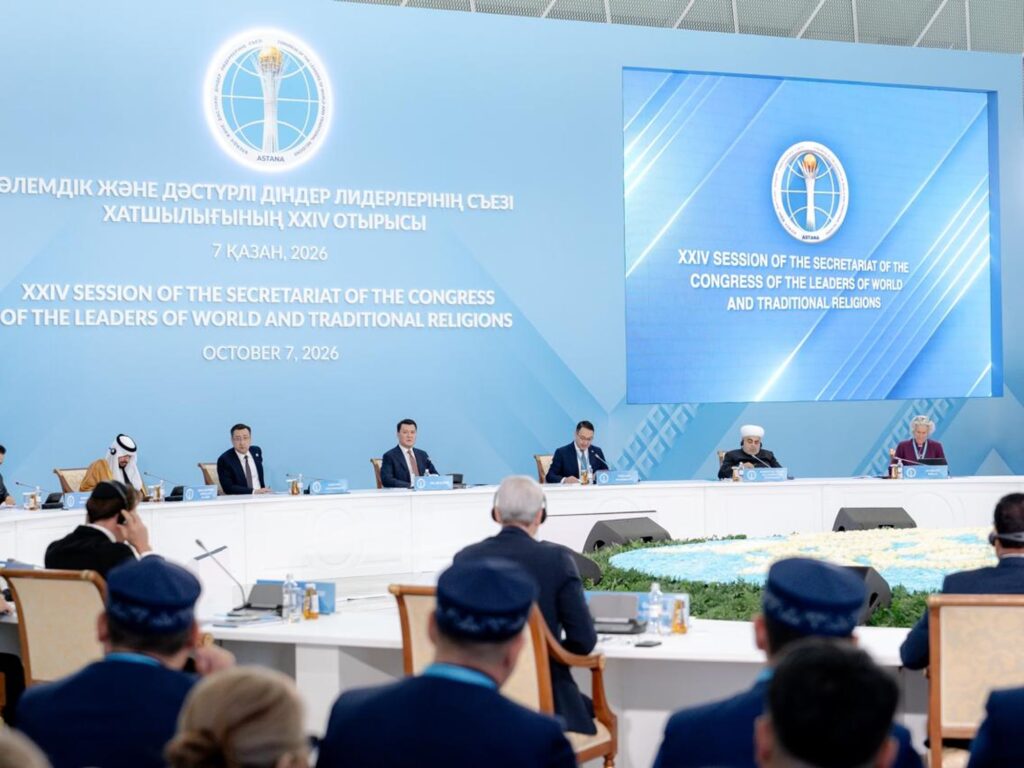
Judge Mohamed Abdelsalam, Secretary-General of the Muslim Council of Elders, addressed religious leaders in Astana, emphasising the critical role of faith communities in promoting peace, coexistence, and ethical technological advancement.
The Muslim Council of Elders has reinforced its commitment to fostering interfaith understanding through its participation in the 24th Meeting of the Secretariat of the Congress of Leaders of World and Traditional Religions, held in Astana, Kazakhstan. The gathering brought together prominent religious leaders and international figures to advance dialogue on shared challenges confronting the global community.
Addressing the assembly, Judge Mohamed Abdelsalam, Secretary-General of the Council, underscored the profound responsibility of religious leaders to work collectively towards resolving contemporary conflicts and strengthening mutual comprehension between peoples and societies. He called upon faith communities to intensify their advocacy for peace whilst supporting international and regional endeavours aimed at conflict resolution.
Judge Abdelsalam conveyed the greetings of His Eminence Dr. Ahmed Al-Tayeb, Grand Imam of Al-Azhar and Chairman of the Muslim Council of Elders, and expressed appreciation for Kazakhstan’s substantial contributions to interfaith dialogue and peaceful coexistence. He highlighted the significance of building upon the 2025 Astana Declaration for Peace, transforming shared principles into concrete actions that benefit societies globally.
A significant portion of his remarks addressed the intersection of technological innovation and human values. Judge Abdelsalam emphasised that artificial intelligence and advanced technological systems, whilst offering valuable analytical capabilities, must remain subordinate to ethical principles that protect human dignity, privacy and freedom. He stressed that such technologies should never supplant human conscience, assume spiritual authority, or serve as independent sources of religious guidance.
The Council’s leadership drew particular attention to the 2019 Document on Human Fraternity, signed in Abu Dhabi by Dr. Al-Tayeb and the late Pope Francis, as a foundational framework establishing principles of human dignity and collective responsibility for humanity’s future. This historic accord continues to guide the Council’s interfaith initiatives.
Judge Abdelsalam advocated for expanded cooperation amongst religious institutions, proposing comprehensive engagement with educational and community-based programmes. He encouraged the active participation of young people, women, researchers, and local community representatives in developing solutions to contemporary challenges.
The Muslim Council of Elders reaffirmed its readiness to collaborate on initiatives strengthening interfaith and intercultural dialogue, advancing human fraternity, addressing pressing global issues, and contributing to international peace and stability.
Source: WAM