
Khaled bin Mohamed bin Zayed chairs first Abu Dhabi Executive Council meeting to use agentic AI platform
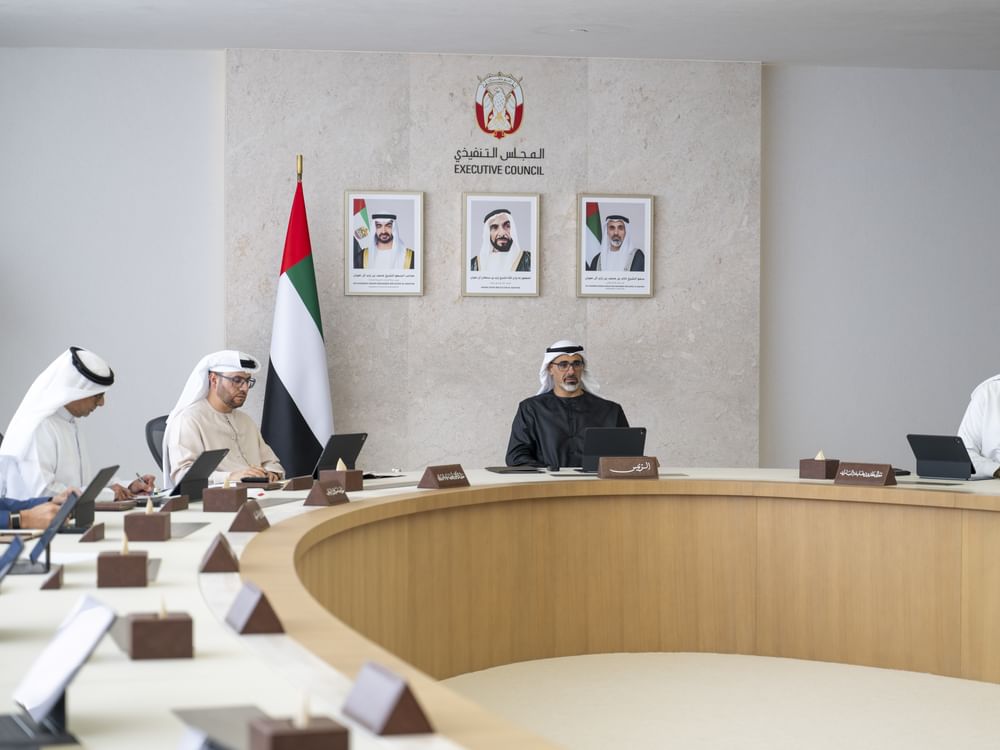
The Crown Prince presided over a session supported by the AI Committee System, approving the second phase of the Liveability Strategy, a major nursery expansion and a new reproductive‑health programme.
Council meeting pilots agentic AI to guide discussion
H.H. Sheikh Khaled bin Mohamed bin Zayed Al Nahyan, Crown Prince of Abu Dhabi and Chairman of the Abu Dhabi Executive Council, chaired a meeting in which an agentic AI platform was used for the first time to support analysis‑based discussion and data‑driven decision making.
The AI Committee System analysed papers submitted ahead of the session and prepared executive summaries. During the meeting the platform supplied real‑time insights and suggested lines of enquiry, supported fact‑checking and produced traceable outputs that link recommendations to source documents. It also generated follow‑up materials, including detailed analytical reports, minutes and action summaries to clarify responsibilities and accelerate implementation.
Liveability Strategy moves to a second five‑year phase
Sheikh Khaled directed the expansion of the Abu Dhabi Liveability Strategy, building on Phase 1 achievements. The initial phase saw completion of more than 60 major projects valued at over AED12 billion, executed as part of a wider approved programme worth AED42 billion. Abu Dhabi’s District Completion Index rose from 67 percent to 84 percent in two years.
The second five‑year phase shifts emphasis from the delivery of community facilities towards improving operational quality and efficiency. It adopts predictive, data‑driven planning to prioritise investments with the greatest impact, strengthens public‑private partnerships and seeks to convert community needs into attractive investment opportunities across social infrastructure.
Nursery expansion and reproductive‑health programme approved
The council reviewed the Al Ghad Nurseries project, which has enrolled 3,253 children across 10 nurseries in Abu Dhabi and Al Ain to date; roughly 80 percent are children of working mothers. The programme has supported early identification of developmental and behavioural needs and strengthened Arabic language skills among attendees.
Sheikh Khaled approved expanding Al Ghad Nurseries, increasing capacity from 3,000 to 12,000 seats by 2029 across Abu Dhabi, Al Ain and Al Dhafra. The expansion is expected to create more than 1,000 additional employment opportunities for Emirati women within the early‑childhood sector.
The council also approved the Abu Dhabi Programme for the Future of Reproductive Health, to be overseen by the Department of Health – Abu Dhabi. The programme aims to build an integrated reproductive‑health ecosystem covering prevention, preconception care, genetic screening, fertility diagnosis and assisted reproductive technologies. It targets increasing IVF success rates to 80 percent by 2030 through precision medicine, genomics, AI and research to enable more personalised care.
AI in education and governance
Members reviewed progress on integrating AI education into private school curricula across the emirate from kindergarten to Grade 12. Early stages emphasise hands‑on, interactive experiences to build foundational understanding without dependence on screens, while parallel teacher‑capacity programmes will support meaningful classroom integration.
The use of the AI Committee System in this meeting marks a step towards embedding advanced analytic tools within Abu Dhabi’s policymaking process, with the stated aims of improving decision quality, speeding implementation and ensuring that outputs remain linked to source evidence.
Source: WAM