
UAE Charts Course in AI-Powered Healthcare Innovation at Forbes Summit
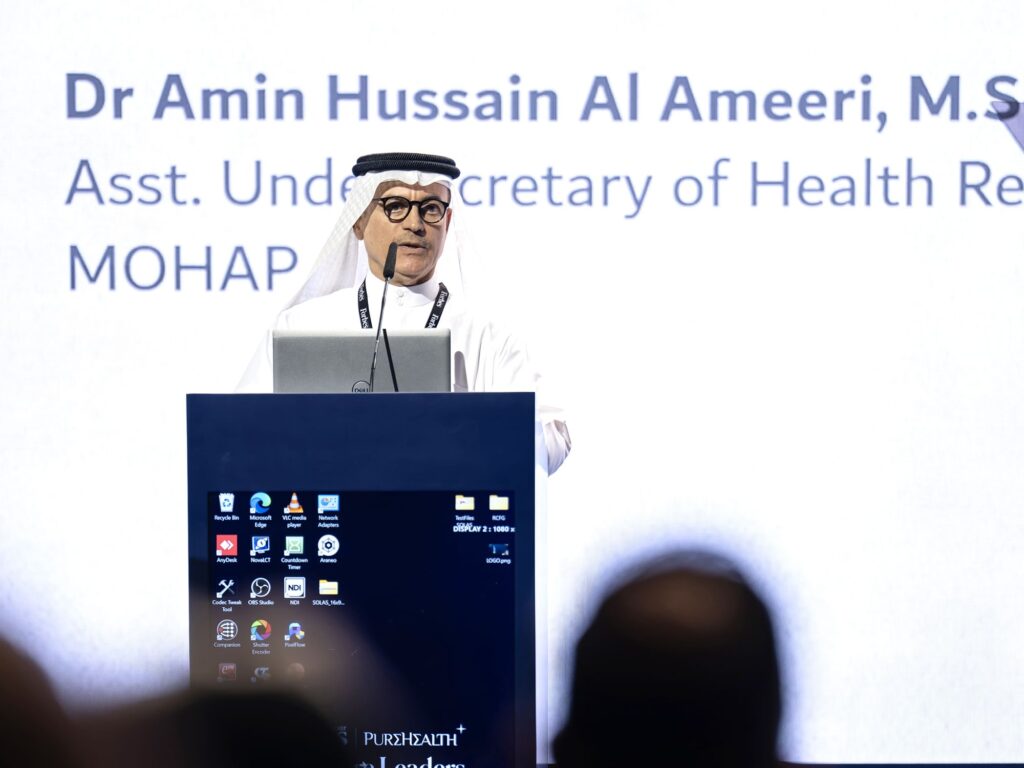
The Ministry of Health and Prevention outlines an ambitious vision for integrated care through artificial intelligence, genomics and precision medicine at the Healthcare Leaders Summit in Abu Dhabi.
The Ministry of Health and Prevention has presented a comprehensive overview of the United Arab Emirates’ strategic advancement in healthcare innovation, showcasing how artificial intelligence, genomics and precision medicine are reshaping the nation’s medical landscape. The presentation took place during the fifth Healthcare Leaders Summit – Abu Dhabi 2026, hosted by Forbes Middle East.
Dr. Amin Hussain Al Ameeri, Assistant Under-Secretary of the Health Regulation Sector at the Ministry, emphasised that the UAE’s healthcare ecosystem is built upon seamless integration between federal authorities and local health organisations. This collaborative framework encompasses the Department of Health – Abu Dhabi, Dubai Health Authority, Sharjah Health Authority, the Ministry of Health and Prevention, Emirates Health Services, and the private sector.
The integrated approach is strengthened through strategic partnerships with international organisations and stakeholder engagement, ensuring the healthcare system remains aligned with global best practices and emerging medical developments. The Emirates Health Council, chaired by the Minister of Health and including representatives from federal, local and private healthcare sectors as well as military and interior ministry medical services, serves as a vital mechanism for aligning national health policies and reinforcing sectoral cohesion.
Regarding technological advancement, Dr. Al Ameeri highlighted the UAE’s expanding deployment of artificial intelligence in both clinical decision-making and operational management. The Emirati Genome Programme, combined with advances in genetics and precision medicine, enables enhanced disease prediction and prevention capabilities. These innovations are complemented by digital health technologies, big data analytics, robotics, telemedicine, biotechnology and medical research initiatives.
A key emphasis was placed on the role of artificial intelligence as an enhancement rather than replacement for healthcare professionals. Dr. Al Ameeri stressed that AI strengthens clinical capabilities in prediction, prevention and treatment, supporting the UAE Government’s framework to transition 50 percent of government sectors and services to Agentic AI models within two years.
The organ transplantation sector exemplifies the UAE’s progress in applying advanced technologies to critical healthcare challenges. Artificial intelligence aids in organ allocation whilst maintaining international standards and minimising potential bias. Since 2016, the UAE has conducted approximately 1,500 organ transplant procedures serving patients from more than 42 nationalities across six organ types, supported by eight transplant hospitals and 19 donor hospitals. Notably, Cleveland Clinic Abu Dhabi stands among the leading institutions in this specialised field.
Transplant survival rates have reached between 92 and 93 percent, demonstrating the efficacy of the UAE’s approach. This achievement is underpinned by a robust legislative and ethical framework, with 39 standards and decrees issued between 2022 and 2026. Significant amendments to organ transplantation law were introduced in 2023 and 2025, with implementation commencing in early 2026. Further regulatory updates are anticipated to accommodate emerging biotechnological developments.
Source: WAM