
UAE-backed Mira Aerospace and Telespazio Ibérica Launch Advanced Wildfire Monitoring Mission in Spain
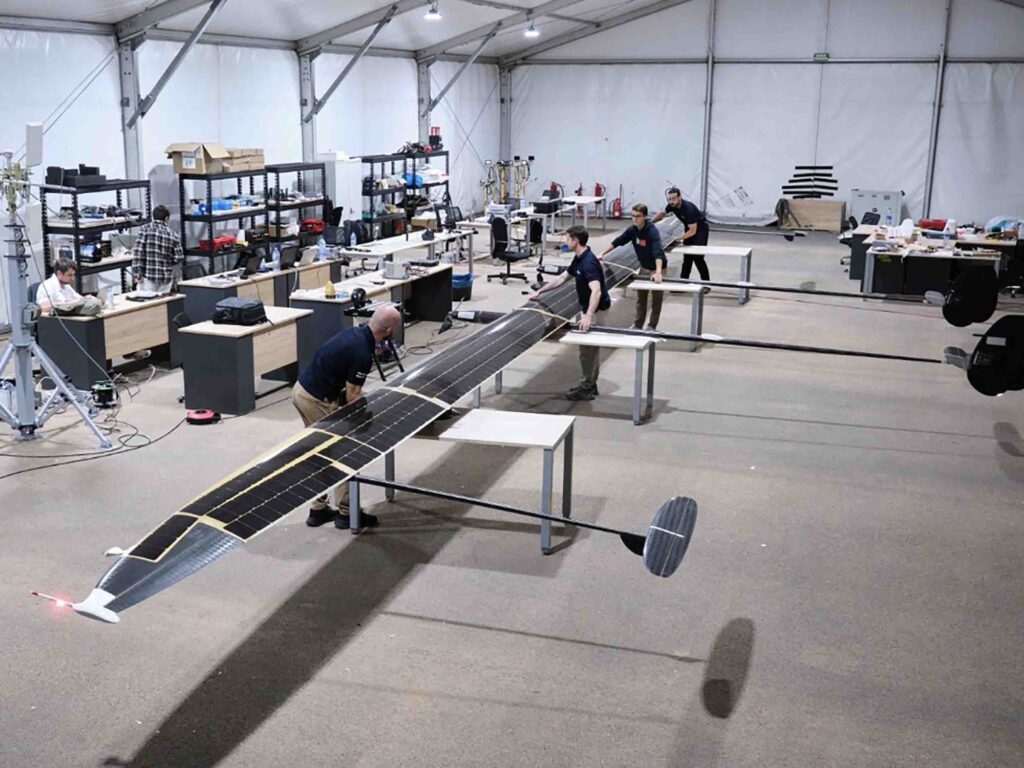
A groundbreaking collaboration between Space42's Mira Aerospace and Telespazio Ibérica has successfully deployed high-altitude platform technology to enhance wildfire detection and emergency response across the Canary Islands, setting European flight records in the process.
A significant advancement in wildfire surveillance has been achieved through the collaborative efforts of Mira Aerospace, the High Altitude Platform Systems subsidiary of Space42, and Telespazio Ibérica, part of Leonardo Space. The initiative, launched from Canarias Stratoport on the island of Fuerteventura, represents a transformative approach to protecting Spain’s forests from the escalating threat of wildfires.
The maiden flight of the ApusNeo18 HAPS model successfully demonstrated the technology’s operational capabilities, maintaining airborne status for 29 hours whilst reaching approximately 16,000 feet. This achievement established two significant European HAPS flight records, whilst the platform’s advanced electro-optical and infrared sensors transmitted live, high-resolution video and imagery to ground stations.
The mission forms part of the ISSEC project, championed by Fuerteventura Technology Park and supported by a consortium of regional and national Spanish authorities. Given that wildfires consumed more than 265,635 hectares of forestland by mid-August 2026, with 42 major incidents recorded, the technology’s deployment arrives at a particularly critical moment for Spain’s environmental protection efforts.
Khaled Al Marzooqi, Chief Executive of Mira Aerospace, underscored the significance of the achievement, noting that the European flight records reflect the sophisticated Earth observation capabilities developed by the UAE-based enterprise and the international confidence placed in its ability to deliver essential projects. He emphasised that the ApusNeo18 platform represents a substantial step towards continuous operational deployment, integrating real-time monitoring with immediate data transmission to support emergency response protocols.
The ApusNeo18 operates as a solar-powered system capable of functioning at stratospheric altitudes whilst carrying specialised Earth observation equipment. Positioned distinctly between conventional aviation and satellite-based systems, it delivers persistent surveillance of specific regions with sensors customised to individual operational requirements.
A series of additional flights are scheduled throughout October, progressively extending operating altitudes towards the stratosphere and expanding the platform’s operational range with the objective of reaching Gran Canaria. These missions will complement existing satellite, aerial and ground-based monitoring systems, creating a comprehensive surveillance network.
Carlos Fernández de la Peña, Chief Executive of Telespazio Ibérica, highlighted how the campaign demonstrates HAPS technology’s transition from experimental validation towards sustained operational missions. He noted that the initiative presents unprecedented opportunities for strengthening wildfire prevention, surveillance and emergency response capabilities across the region.
The programme benefits from support through multiple funding mechanisms, including the European NextGenerationEU Recovery and Resilience Mechanism, and aligns with several strategic initiatives including Canarias Geo Innovation 2030 and the Canary Islands Aerospace Strategy. All flights remain subject to operational authorisation, weather conditions and airspace availability.
Source: WAM