
GCC Countries Lead Global Remittance Rankings with Record US$161 Billion Outflow
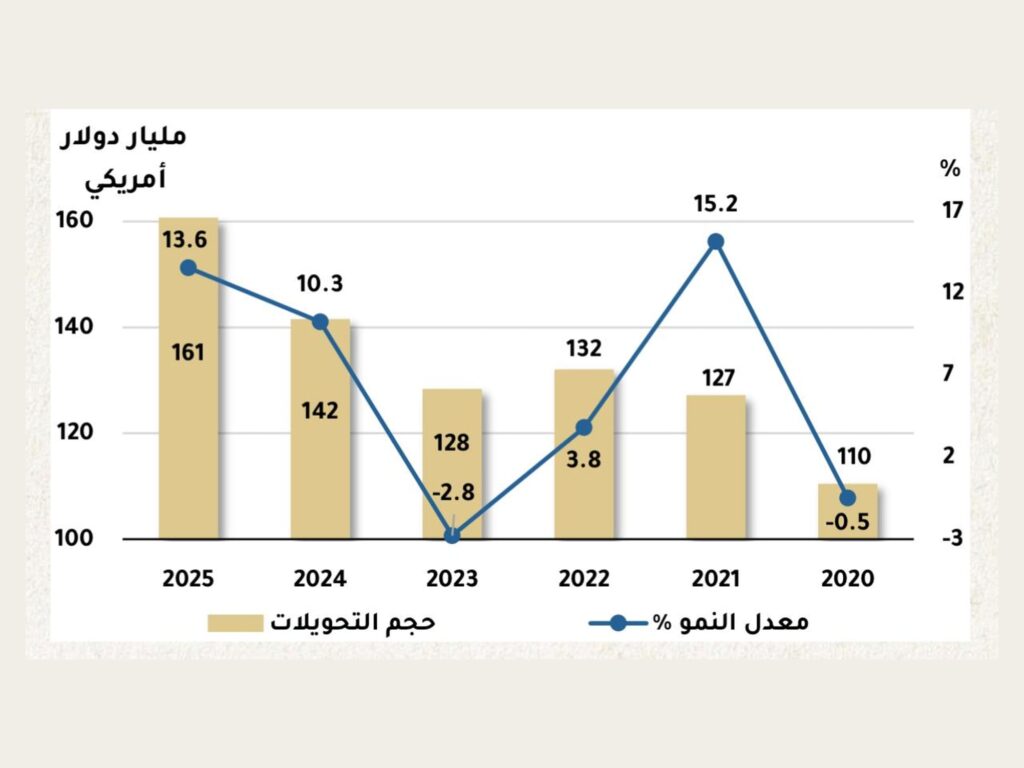
The Gulf Cooperation Council nations have cemented their position as the world's foremost source of workers' remittances, with outflows reaching approximately US$161 billion in 2025—a substantial 13.6 per cent increase year-on-year.
The Gulf Cooperation Council countries have established themselves as the world’s leading source of workers’ remittances, according to new data released by the Statistical Centre for the Cooperation Council for the Arab Countries of the Gulf (GCC-Stat). During 2025, these nations collectively transferred approximately US$161 billion to recipient countries, marking a robust 13.6 per cent increase compared with the previous year and representing a gain of roughly US$19 billion.
This exceptional performance reflects a remarkable recovery trajectory. Following a contraction in 2023, remittance flows have now grown for two consecutive years, reaching their highest level in 2025. The expansion reflects the sustained magnetism of the GCC region for expatriate workers, coupled with the vigorous development of diverse economic sectors encompassing infrastructure, services, manufacturing and non-oil activities.
When contextualised within the broader economic landscape of the GCC, workers’ remittances comprised approximately 6.6 per cent of regional gross domestic product in 2025, rising from 6.0 per cent in 2024 and 5.7 per cent in 2023. This metric underscores the substantial integration of remittance flows within the economic fabric of GCC nations, though the ratio itself reflects relative proportionality rather than economic performance indicators.
The global significance of GCC remittance activity becomes evident when compared with major developed economies. Outward remittances from the United States amounted to approximately US$107 billion, Switzerland to approximately US$43 billion, Germany to approximately US$27 billion, and France to approximately US$21 billion. This comparative analysis demonstrates the outsized role that GCC nations play within international financial flows despite their smaller total populations.
Beyond their quantifiable financial dimensions, these remittances fulfil a vital socio-economic function. They fortify household incomes across recipient nations, sustain consumption patterns, and provide essential scaffolding for economic and social stability in destination countries. The flows exemplify the GCC’s profound regional economic influence and its intricate connection to the global economy, positioning the Council as a consequential participant in worldwide financial networks.
Source: WAM