
Five UAE aid convoys deliver 617 tonnes of humanitarian relief to Gaza
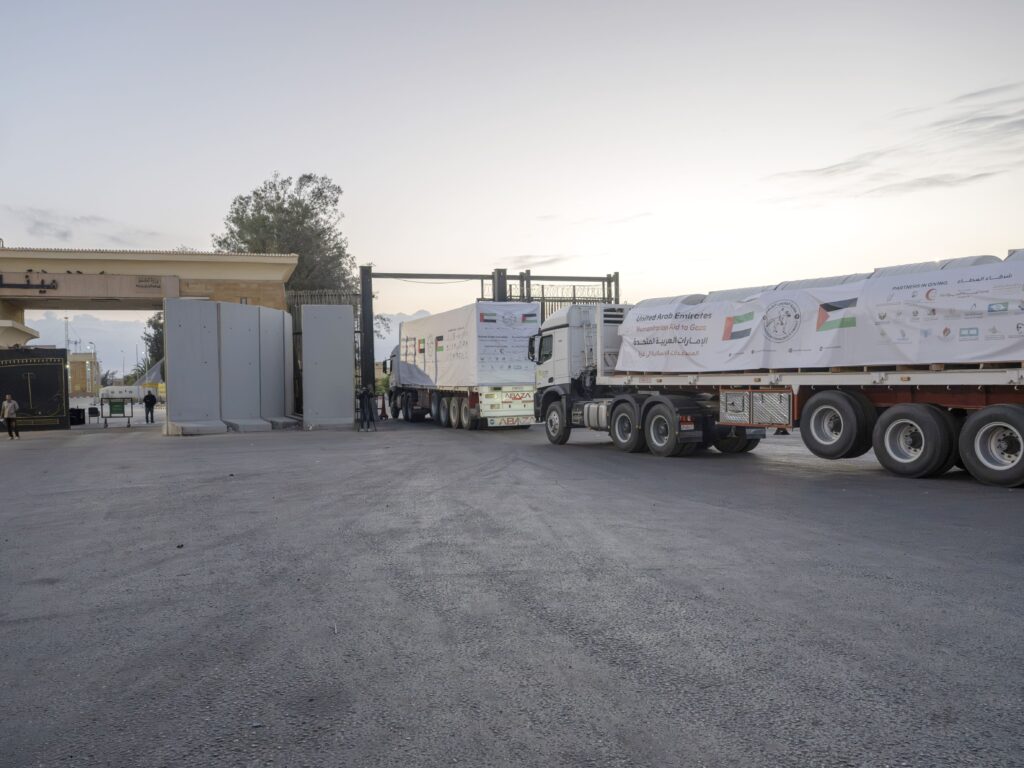
The United Arab Emirates has deployed five convoys carrying essential food and shelter supplies to Gaza, reinforcing its steadfast commitment to supporting the Palestinian people through Operation Chivalrous Knight 3.
The United Arab Emirates has continued its extensive humanitarian mission to Gaza, with five convoys comprising 55 trucks and carrying 617 tonnes of essential aid entering the territory this week under the auspices of Operation Chivalrous Knight 3.
The latest deployment, focused on delivering food and shelter supplies, forms part of the UAE’s unwavering dedication to addressing the pressing humanitarian needs of the Palestinian people and alleviating their suffering during this challenging period.
Since the inception of Operation Chivalrous Knight 3, the scale of the UAE’s relief efforts has been remarkable. The operation has now facilitated the entry of 14,442 trucks into the Gaza Strip, collectively delivering an impressive 136,891 tonnes of humanitarian aid. This substantial logistical achievement underscores the UAE’s sustained commitment to providing comprehensive support to vulnerable populations.
The success of these operations owes much to the critical infrastructure established to manage the flow of assistance. The UAE Humanitarian Aid Logistics Centre, situated in the Egyptian city of Al Arish, serves as the operational hub for this endeavour. Here, incoming aid is meticulously received, sorted and prepared before being transported across the border to Gaza, ensuring that humanitarian supplies reach those in need with maximum efficiency and care.
Operation Chivalrous Knight 3 represents a continuation of the UAE’s broader humanitarian strategy, reflecting the nation’s values of compassion, solidarity and practical support for those facing hardship. Through its systematic approach to aid distribution and logistics, the UAE demonstrates how structured humanitarian efforts can make a tangible difference in the lives of vulnerable communities.
Source: WAM