
Abu Dhabi University Concludes Third International Conference on Education Exploring Pedagogical Innovation for the AI Era
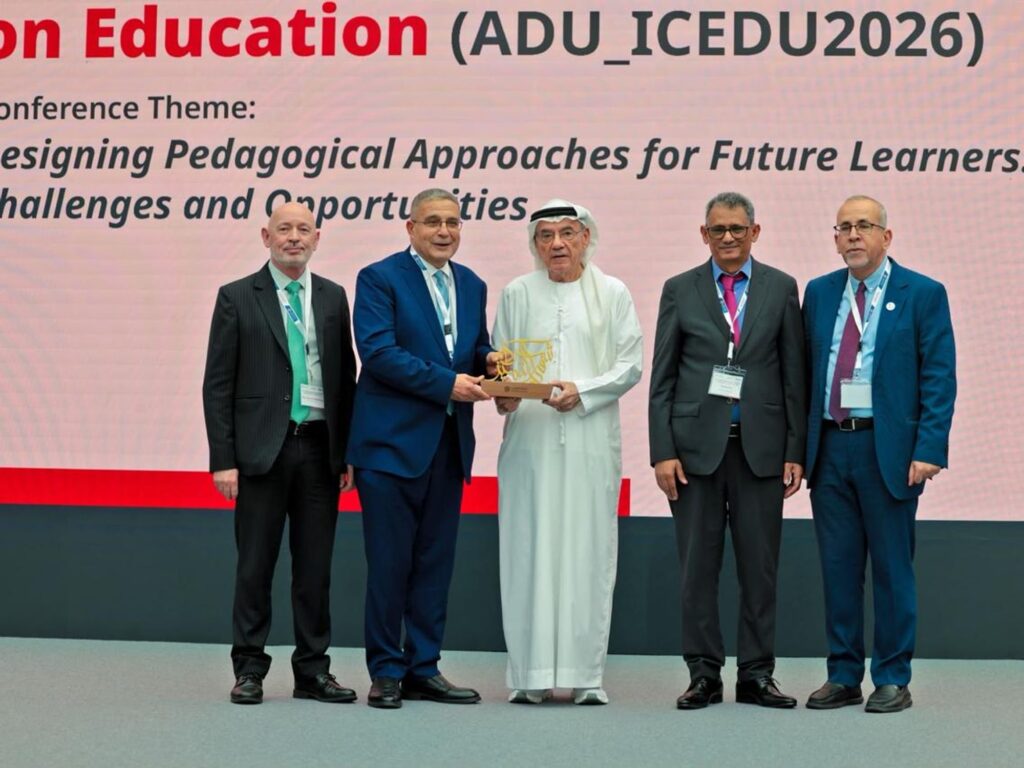
Under the patronage of Sheikh Nahyan bin Mubarak Al Nahyan, Minister of Tolerance and Coexistence, Abu Dhabi University has concluded its third International Conference on Education, bringing together leading voices in educational research and policy to examine how institutions can prepare learners for a technology-driven future.
Abu Dhabi University has successfully concluded the third edition of the International Conference on Education (ADU_ICEDU2026), a two-day gathering of exceptional distinction held in Al Ain City under the patronage of Sheikh Nahyan bin Mubarak Al Nahyan, UAE Minister of Tolerance and Coexistence. The conference assembled an impressive assembly of government representatives, educational leaders, researchers and policymakers to examine the profound ways in which innovative pedagogical approaches must evolve to serve an increasingly complex, artificial intelligence-driven and skills-oriented future.
The distinguished gathering was graced by the presence of HZaki Nusseibeh, Cultural Advisor to the President of the UAE and Chancellor of UAEU; Mahra Al-Mutaiwie, Director of Regional Center for Educational Planning (RCEP-UNESCO); Dr. Mohammed Abdullah Al-Ali, Chairman of TRENDS Group; and Abdelmajeed Shamlawi, Chief Executive Officer of Queen Rania Teacher Academy, alongside senior leaders and experts from across the education sector.
Organised around the theme “Designing Pedagogical Approaches for Future Learners: Challenges and Opportunities,” the conference presented 141 research papers distributed across 12 thematic tracks encompassing artificial intelligence and digital transformation, sustainability, inclusive education and industry-academic collaboration. The intellectual programme was enriched by four keynote addresses, a Presidential Dialogue examining universities and future learners in the age of artificial intelligence, a fireside chat exploring Generation Z and the future of work, high-level panel discussions and five professional development workshops. More than 36 distinguished speakers, moderators and panelists representing regional and global universities, education authorities, schools, industry and professional organisations contributed to the comprehensive two-day programme.
Professor Ghassan Aouad, Chancellor of Abu Dhabi University and Conference Advisor, observed that the discussions had reinforced the imperative of approaching the future of education with both ambition and responsibility. He emphasised that whilst technology, particularly artificial intelligence, is fundamentally reshaping how knowledge is created, delivered and applied, meaningful educational progress must continue to be grounded in inclusion, human values and demonstrable impact.
Throughout the conference, speakers addressed the responsible integration of artificial intelligence in teaching and learning, the necessity of preparing learners with future-ready skills and mindsets, and the importance of inclusive, evidence-based approaches to education. Discussions examined emerging technologies whilst ensuring their adoption remains responsible, inclusive and centred on the needs and experiences of learners and educators.
A significant highlight of the conference was the official launch of the Ali Bin Harmal Educational Research Grant, designed to advance educational research across the United Arab Emirates. The first stage will involve researchers from Abu Dhabi University and Liwa University, with expansion to eligible universities nationwide commencing from the 2027–28 academic year.
Researchers and practitioners shared evidence, case studies and emerging approaches spanning artificial intelligence and digital pedagogy, curriculum and assessment, student success, faculty development, sustainability, experiential learning and industry-academia collaboration. Notable among the presentations were projects supported by Abu Dhabi University’s Teaching and Learning Grant 2025–26, exploring how artificial intelligence can strengthen academic feedback and deepen students’ understanding of complex subjects, alongside innovative approaches to curriculum design, scientific reasoning and critical thinking.
Source: WAM