
GISEC experts warn AI requires stronger UAE cyber readiness
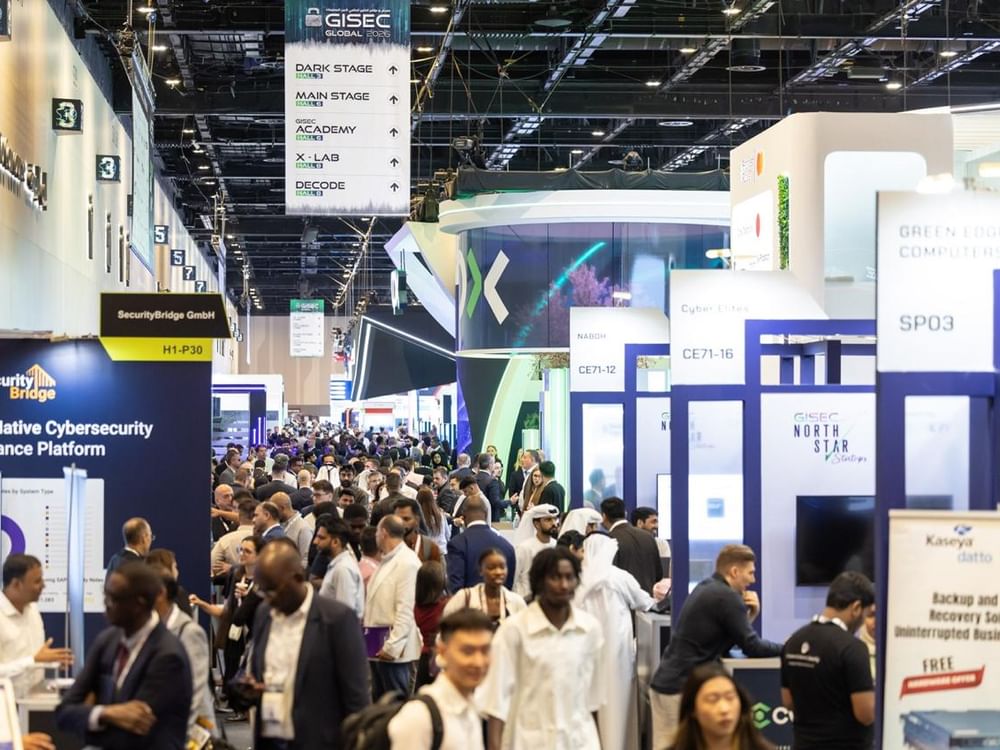
Speakers at GISEC Global 2026 urged firms and authorities to adopt proactive, evidence-led defences as AI raises the speed, scale and sophistication of cyber threats.
AI elevates cyber risk, GISEC speakers warn
Delegates at GISEC Global 2026 in Dubai told the Emirates News Agency (WAM) that the rapid spread of artificial intelligence is reshaping the cyber-threat landscape and demanding a shift from reactive defence to proactive, evidence-based readiness. The warnings carry national significance as UAE entities, service providers and critical infrastructure operators confront new modes of attack.
Hadi Anwar, chief executive of CPX, said AI-powered threats are growing in speed, scale and sophistication. He cited risks such as deepfake-enabled fraud, identity-based attacks and AI-driven social engineering. As organisations move from experimentation to widespread operational deployment of generative models, he added, they must prepare for hazards including ungoverned AI use, data leakage and model manipulation that can undermine data integrity.
Anwar argued that generative AI turns cyber security into a direct business and governance issue. He called for robust AI governance, security throughout the AI lifecycle and stronger protection of complex digital supply chains that rely on third-party models. For those reasons, CPX has been refining its Sovereign Resilience Response, a continuous UAE-led defence model that combines readiness, protection, automated containment and rapid recovery to preserve operational continuity.
CPX is seeing pronounced demand for Secure AI, physical security and operational-technology security among its six core capabilities shown at GISEC. The company is also expanding talent-development programmes, including its She Protects initiative, to bolster national digital sovereignty and nurture local expertise.
Ashraf Koheil, Group-IB vice president for META and ANZ, described the company’s Prediction-First approach, which aims to give defenders earlier visibility of threats rather than to promise perfect forecasting. Group-IB continuously monitors threat actors, malicious infrastructure, compromised credentials, the sale of access to corporate networks and evolving attack techniques. Correlating these indicators with investigation data and AI, the firm seeks to detect patterns before incidents materialise.
Group-IB said it has carried out more than 1,600 successful investigations into high-tech crime since 2003 and highlighted regional trends: GCC countries were among the world’s top 10 targets for supply-chain attacks in 2025, while the financial sector accounted for 28.5 percent of phishing attacks in the Middle East and Africa. The company underlined the importance of a strong local presence — including Digital Crime Resistance Centres in the UAE, Saudi Arabia and Egypt — and close public‑private cooperation in combating transnational cybercrime.
Both speakers stressed that safeguarding interconnected physical and digital systems will require sustained collaboration between governments, the private sector and technical specialists to maintain national resilience as AI reshapes the threat environment.
Source: WAM