
Abu Dhabi Climate Solutions Summit 2026 Concludes with Landmark Gathering of Global Climate Innovators
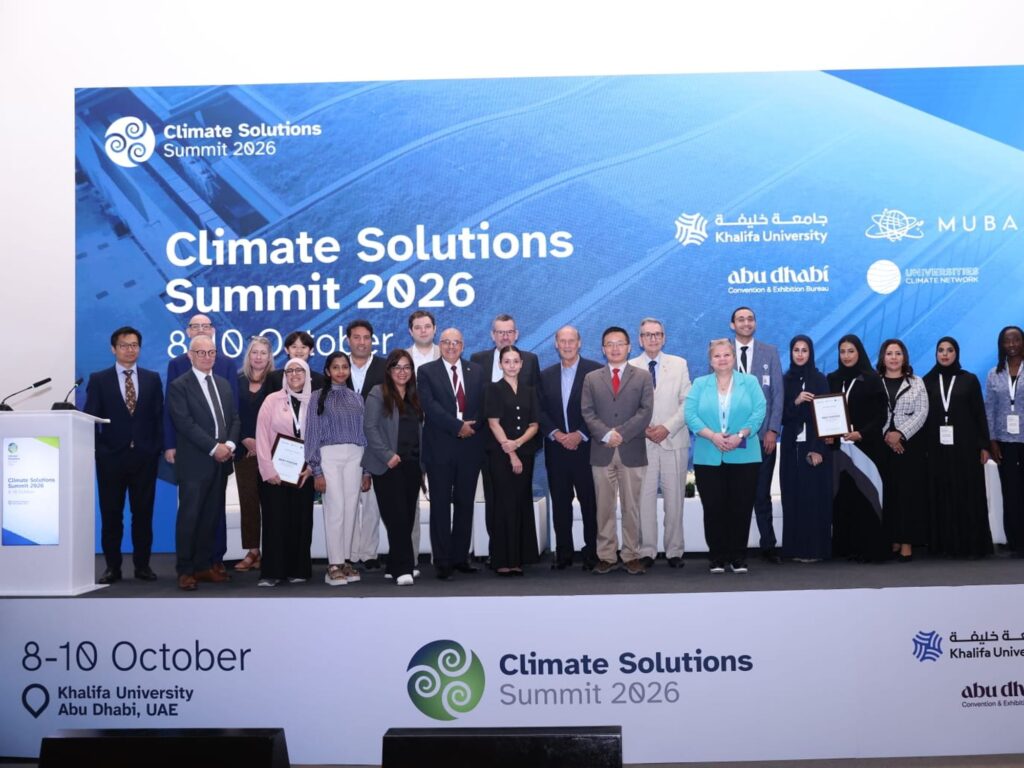
Khalifa University's two-day summit brought together over 1,000 researchers, policymakers and young innovators to advance research-driven climate solutions with real-world impact across energy, water and sustainable systems.
Khalifa University of Science and Technology has concluded the Abu Dhabi Climate Solutions Summit 2026, a significant international gathering devoted to transforming climate research and innovation into practical, deployable solutions. Held across two days at the University’s Main Campus under the unifying theme ‘From Climate Knowledge to Climate Action,’ the summit represented a pivotal moment in the global effort to address interconnected climate and resource challenges.
The gathering drew over 1,000 registrations and featured more than 100 innovative research posters, reflecting the breadth and depth of climate science and entrepreneurship currently being pursued globally. The summit was co-organized by Khalifa University’s Research Institute for Resource Management and Sustainability and the UAE Universities Climate Network, with support from the Mubadala Youth Council, demonstrating the collaborative spirit essential to advancing climate solutions.
A distinctive feature of the summit was its pronounced focus on young innovators and emerging talent. Five dedicated youth sessions provided students and early-career researchers with platforms to engage climate challenges through design thinking, communication strategies, technology pitching and peer-led discussions. This commitment to nurturing the next generation of climate leaders extended throughout the programme, encompassing topics from artificial intelligence applications to social media engagement and polar climate research.
The summit’s intellectual range was notably comprehensive. Discussions examined water security and atmospheric water extraction technologies, sustainable agriculture and food systems, health implications of climate change, innovative materials science, carbon capture and storage, and the interconnected nature of energy, water and food security. Sessions on women scientists’ contributions to climate research and solutions highlighted the importance of diverse perspectives in advancing the field.
A central insight emerging from the two days was the recognition that climate change must be approached as a systemic challenge rather than through isolated technological solutions. Participants explored how renewable energy, peaceful nuclear energy, storage systems, hydrogen, carbon capture and efficiency measures can operate in complementary fashion, supported by appropriate infrastructure and enabling regulatory environments.
The summit included a focused conversation on translating climate innovation from laboratory to global market deployment. Discussion highlighted the critical gaps between scientific achievement and commercial scalability, emphasizing that solutions must be affordable, responsive to real-world needs and supported by appropriate financing and infrastructure. Participants examined the importance of identifying genuine customer needs and designing demonstration projects around market demand alongside technical performance.
Professor Ebrahim Al Hajri, President of Khalifa University and General Chair of the summit, observed that the gathering demonstrated the value of convening research institutions, industry, policy makers, investors and talent around shared climate imperatives. He emphasised the University’s commitment to advancing research-driven solutions across energy, water, industry and urban systems, with focus on ensuring knowledge and innovation deliver meaningful societal and economic benefit.
Following the summit, Khalifa University will collaborate with the Global Alliance of Universities on Climate and the Higher Education Climate Network of Networks to distil key discussion priorities into formal recommendations for international climate policy conversations. The summit’s international dimension was reinforced through contributions from the World Association of Young Scientists and leading institutions including the University of Cambridge and Tsinghua University.
Source: WAM