
Hamdan bin Mohammed approves New Fourth Corridor to link Dubai and Abu Dhabi
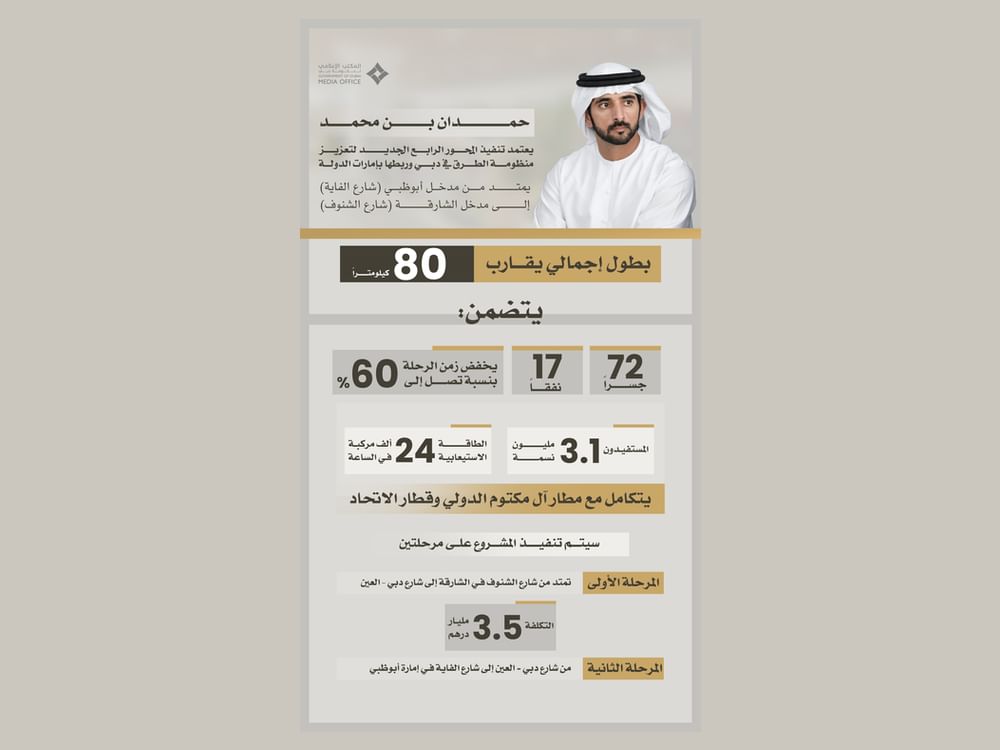
Dubai has approved an 80km New Fourth Corridor that will connect Al Faya Road in Abu Dhabi with Al Shanouf Road in Sharjah, delivered in two phases to strengthen inter‑emirate connectivity and ease logistics flows.
Scope and purpose
H.H. Sheikh Hamdan bin Mohammed bin Rashid Al Maktoum has approved the New Fourth Corridor project, an 80km strategic route designed to bolster Dubai’s links with the federal road network and neighbouring emirates. The corridor will run from Al Faya Road in Abu Dhabi to Al Shanouf Road in Sharjah and is intended to support logistics traffic, divert heavy vehicles from urban centres and facilitate movement between residential and development areas.
Engineering and phases
The scheme will be implemented in two main phases. Phase 1, at an estimated cost of around AED3.5 billion, will extend roughly 30km from Al Shanouf Road in Sharjah to Dubai–Al Ain Road. It will comprise a through corridor with 12 lanes across both directions, a capacity of up to 24,000 vehicles per hour in both directions and is expected to serve about 600,000 people. Journey times on the section are projected to fall by 60%, from 35 minutes to 14 minutes.
The project as a whole will include 72 bridges, 17 tunnels and 45 stormwater drainage culverts. Phase 1 will also deliver approximately 55 lane‑kilometres of at‑grade roads, 2.5km of tunnels and 21km of bridges and ramps, together with the widening of Dubai–Al Ain Road from three to four lanes in each direction between Emirates Road and Lehbab Road and upgrades to four major intersections.
Phase 2 will extend about 50km from Dubai–Al Ain Road to Al Faya Road in Abu Dhabi. It is planned as a 12‑lane corridor with a capacity of 24,000 vehicles per hour, serving an estimated 3.1 million people. Phase 2 is forecast to reduce journey times from 50 minutes to 24 minutes (a 52% reduction) and will include roughly 190 lane‑kilometres of at‑grade roads, 3.5km of tunnels and 157km of bridges and ramps.
Connectivity and environmental considerations
The route will pass key landmarks including Al Maktoum International Airport, the Al Marmoom and Al Wohoosh desert conservation reserves, and the Etihad Rail alignment. Dubai’s Roads and Transport Authority has said the corridor will help integrate the road network with major transport projects and improve conditions for freight and commercial transport, while easing pressure on existing urban corridors.
H.H. Sheikh Hamdan said the project is a strategic addition to Dubai’s road network and part of a vision to keep the emirate prepared for future growth. Mattar Al Tayer, Director General of Dubai’s Roads and Transport Authority, described the approval as part of Dubai’s ongoing efforts to develop integrated and sustainable infrastructure that responds to rapid urban and population growth.