
University of Sharjah Launches Global Leadership Programme on Age-Friendly Environments
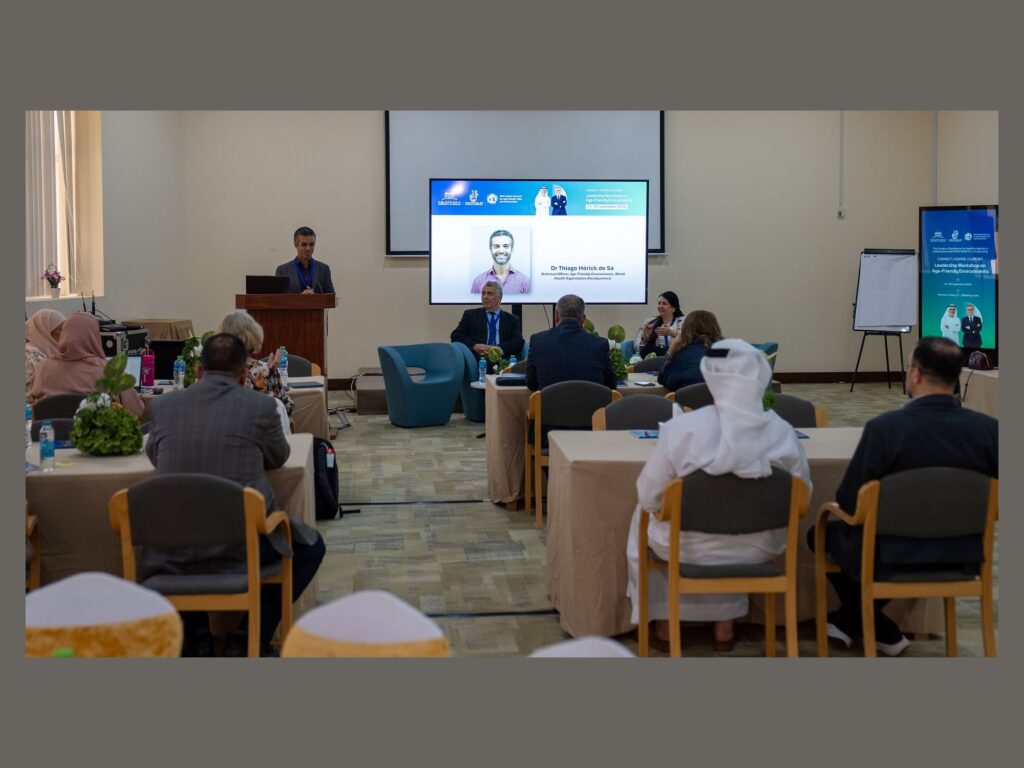
The University of Sharjah has inaugurated a specialised leadership training course in collaboration with the World Health Organisation, bringing together international experts to advance age-friendly urban design and community support.
The University of Sharjah has inaugurated a comprehensive leadership training programme designed to address one of the world’s most pressing demographic challenges. Held on 29 and 30 September, the two-day course, titled “Connect, Inspire, Support: Leadership Course on Age-Friendly Environments,” brought together distinguished local and international experts to examine how cities and communities can more effectively support older adults.
Organised by the University’s Center of Excellence in Healthy Aging in partnership with the World Health Organisation’s Global Network for Age-Friendly Cities and Communities and Sharjah’s Age-Friendly Office, the initiative reflects a strategic commitment to advancing evidence-based policymaking in an ageing world. International academics and World Health Organisation-accredited experts participated in the programme, contributing their expertise to discussions on sustainable urban design and elderly care.
Prof. Nouar Tabet, Acting Vice Chancellor for Academic Affairs, underscored the gravity of population ageing as a global public-health priority. He emphasised that the University is leveraging its academic resources and multidisciplinary research capabilities to contribute meaningfully to policy development and community innovation. The pursuit of WHO accreditation for the Center of Excellence, he noted, represents a strategic investment that will enhance the institution’s research standing, global competitiveness and sustainable social impact.
Dr. Amina Almarzooqi, Vice Chancellor for Student Affairs, highlighted Sharjah’s pioneering role since becoming the first Arab city to join the WHO’s Global Network for Age-Friendly Cities and Communities in September 2016. She characterised this membership as representing far more than conventional affiliation, describing it as a sustained commitment to comprehensive development and cross-sector partnerships. Crucially, she emphasised that older adults must be recognised as active partners whose experiences should inform the design and evaluation of all initiatives intended to serve them.
Sharjah’s vision, she stated, is to bring vitality, dignity and meaningful participation to later life. The University of Sharjah, she noted, serves as an essential partner in translating research into practical outcomes, generating evidence and developing innovations that ensure sustainable, supportive environments. “Age-friendly environments are now an immediate responsibility,” she affirmed, highlighting that an age-friendly city ultimately benefits people of every age.
Dr. Tamer Shousha, Director of the University’s Center of Excellence in Healthy Aging, reaffirmed the centre’s commitment to sharing best practices and connecting theoretical frameworks with practical field experience. This integrated approach, he explained, ensures the creation of safe environments that genuinely meet the needs of older adults whilst improving the quality of available services.
Source: WAM