
Global Food Week Concludes in Abu Dhabi with Record-Breaking Achievements
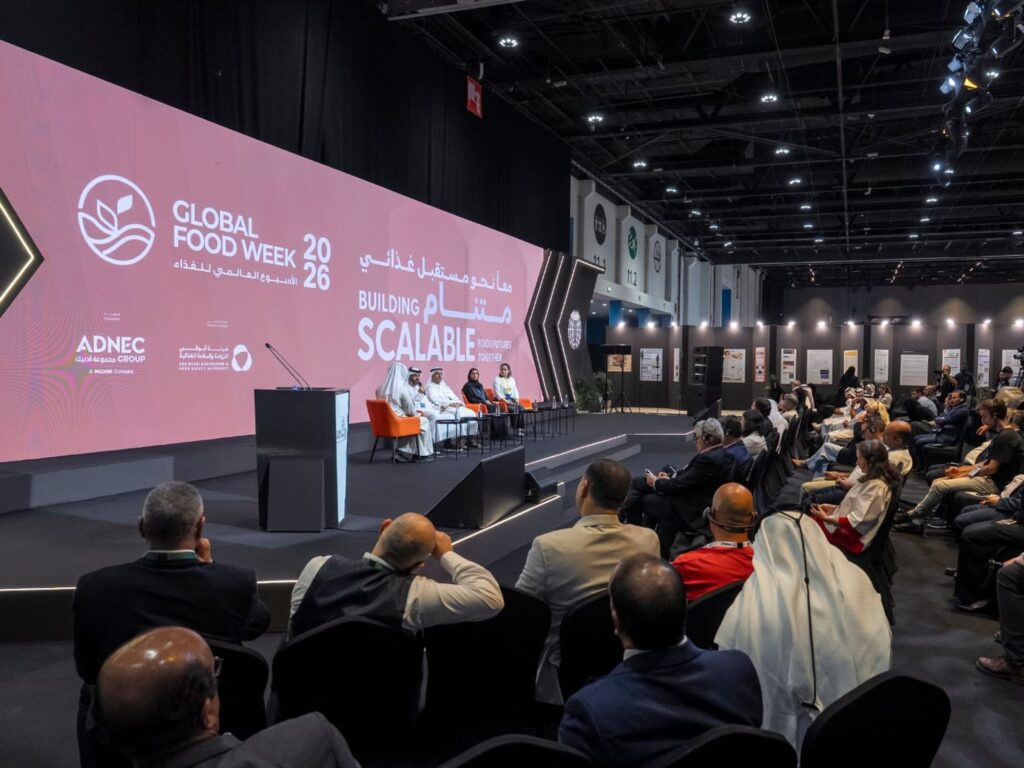
The largest edition of Global Food Week has concluded with unprecedented success, generating AED 6.9 billion in agreements and attracting over 47,000 attendees from around the world.
The largest edition of Global Food Week has concluded in Abu Dhabi, establishing a remarkable milestone for the international food and agriculture sectors. Held under the distinguished patronage of His Highness Sheikh Mansour bin Zayed Al Nahyan, Vice President and Deputy Prime Minister, the week demonstrated the emirate’s unwavering commitment to fostering global collaboration in food security and sustainable agriculture.
The event generated exceptional commercial momentum, with ninety-seven agreements signed valued at AED 6.9 billion over three days, representing a five per cent increase from the preceding edition. This achievement reinforces Global Food Week’s established position as a paramount platform for business, investment and collaboration across the global food and agriculture landscape.
Organised by ADNEC Group in partnership with the Abu Dhabi Agriculture and Food Safety Authority (ADAFSA), the 2026 edition encompassed the second Global Food Security Summit alongside the twelfth Abu Dhabi Date Palm Exhibition, held in partnership with the Khalifa International Award for Date Palm and Agricultural Innovation. The week also introduced the inaugural Abu Dhabi Honey Symposium, the AgriTech Forum and international workshops for the Food and Agriculture Organisation Policy Majlis and YalaFast programme.
The gathering attracted more than 47,092 attendees, marking a seventeen per cent increase compared to the previous edition. Notably, the event introduced an expanded consumer experience component, enabling visitors to engage directly with the latest food and beverage products from local and international exhibitors through an enhanced Shop at the Show experience.
Dr Tareq Ahmed Al Ameri, Acting Director-General of ADAFSA, emphasised the event’s role in advancing global food systems. He underscored that food security necessitates international cooperation to address shared challenges including climate change, water scarcity and supply chain resilience. Global Food Week 2026 succeeded in bringing together leaders from public and private sectors worldwide to transform dialogue into practical solutions.
Humaid Al Dhaheri, Group CEO of ADNEC Group, highlighted the edition’s extraordinary scale, noting that participating nations numbered from ninety-two countries with 2,580 exhibitors spanning eight specialised sectors across the food value chain. National exhibitors represented sixty-seven per cent of participation, whilst small and medium-sized enterprises accounted for twenty-two per cent of exhibiting companies.
The Abu Dhabi Date Palm Exhibition, now in its twelfth edition, further reinforced its international standing through the participation of one hundred exhibitors and participants from twelve countries. The inaugural Abu Dhabi Honey Symposium, organised in collaboration with Apimondia, the International Federation of Beekeepers’ Associations, emerged as the largest specialised scientific gathering for the beekeeping and honey production sector in the MENA region.
The AgriTech Forum showcased next-generation farming technologies throughout the event, including controlled-environment agriculture, automated precision irrigation systems, soil-regeneration research and artificial intelligence-driven production models designed to reduce water consumption in arid environments. The forum’s final day encompassed sessions on international regulatory alignment, biosecurity protocols and cold-chain infrastructure across the Middle East.
Source: WAM