
Muslim Council of Elders Champions Expanded Role for Religious Leadership in Global Affairs
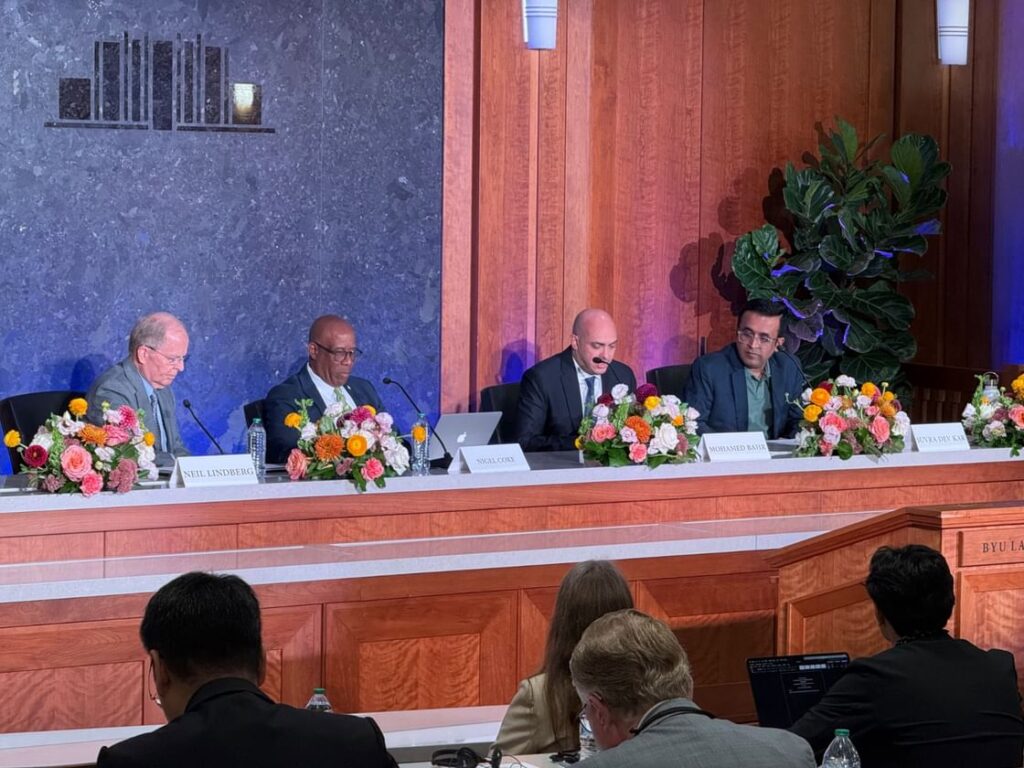
At an international symposium in the United States, the Council has called for religious leaders to contribute meaningfully to discussions on artificial intelligence, climate change and technology ethics.
The Muslim Council of Elders has articulated an ambitious vision for religious leadership in addressing humanity’s most pressing challenges, speaking at the 33rd Annual International Law and Religion Symposium hosted by Brigham Young University from 4 to 6 October 2026.
Mohamed Bahr, Director of Strategic Planning at the Council, reframed the conversation around interfaith relations during a session on respect among followers of different faiths. Rather than focusing solely on mutual respect between religious communities, he emphasised the imperative to build societies and institutions in which people of diverse faith backgrounds collaborate actively in shaping humanity’s future.
Mr Bahr argued that religious diversity need not require abandoning core convictions. Instead, it rests upon acknowledging the dignity of others, honouring their right to exist, and accepting shared responsibility towards humanity and society. He stressed that religions, equipped with profound moral values and ethical principles developed over centuries of institutional experience, possess distinctive capacity to inform responses to contemporary challenges.
Artificial intelligence, climate change, and technology ethics emerged as priority areas where religious perspectives should feature prominently in policy formation. Mr Bahr advocated for increased engagement of religious leaders, figures and institutions within international forums, enabling them to contribute substantively to global agendas and the ethical foundations underpinning policies on shared challenges.
The Council’s strategy prioritises what Mr Bahr termed “intellectual respect” amongst followers of different religions and cultures, fostering appreciation for diversity and pluralism whilst actively challenging stereotypes and misconceptions. This approach aligns with the Muslim Council of Elders’ established commitment to dialogue, tolerance, and coexistence, alongside efforts to counter hate speech and extremism.
Since its establishment in 2014, the Council has endeavoured to translate these principles into concrete action through strengthened relationships amongst religious leaders and institutions. Initiatives include religious diplomacy, the Faith Pavilion at UN Climate Conferences, and participation in international discussions concerning artificial intelligence, technology and human dignity.
These efforts build upon the historic 2019 Document on Human Fraternity, signed in Abu Dhabi by His Eminence Dr. Ahmed Al-Tayeb, Grand Imam of Al-Azhar and Chairman of the Muslim Council of Elders, and the late His Holiness Pope Francis. The document codified principles of human fraternity that continue to inspire institutional partnerships across faiths.
During the symposium, Mr Bahr engaged with Brigham Young University students of Arabic language and Middle East studies, underscoring youth’s pivotal role in building bridges of understanding and communication across religious and cultural divides.
Source: WAM