
UAE’s NCM signs MoU with Tonga to boost meteorology and geophysics cooperation
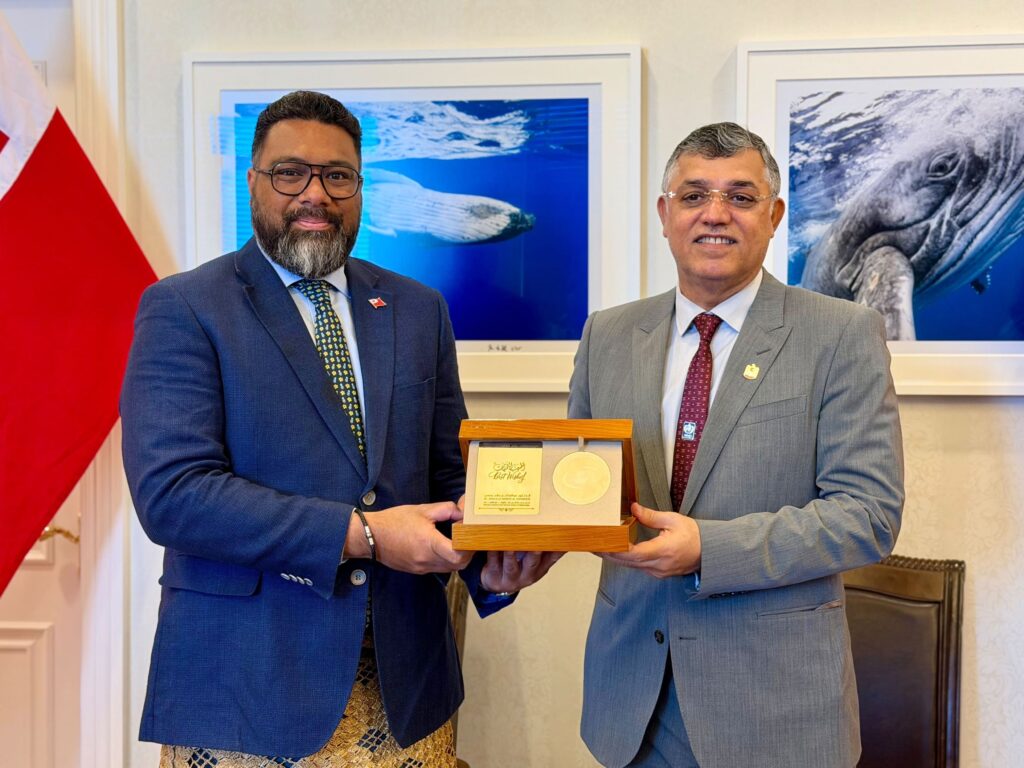
The National Centre of Meteorology and Tonga Meteorological Services have agreed a five‑year framework to share expertise, technology and early‑warning capabilities in meteorology and geophysics.
UAE and Tonga agree five‑year cooperation framework on weather and geophysics
The UAE National Centre of Meteorology (NCM) and Tonga Meteorological Services (TMS) have signed a Memorandum of Understanding to expand collaboration in meteorology and geophysics, and to strengthen institutional and professional capacity on both sides.
The MoU was signed by Dr Abdulla Ahmed Al Mandous, President of NCM, and Lord Fakafanua, Prime Minister of the Kingdom of Tonga and Minister for Meteorology, Energy, Information, Disaster Management, Environment, Communications and Climate Change. The agreement took effect on the date of signature and is valid for five years, renewable by mutual written consent. Either party may terminate it with three months’ written notice.
On the sidelines of the signing, Dr Al Mandous met His Royal Highness Crown Prince Tupouto’a ‘Ulukalala, who commended the NCM president’s support for Tonga through the World Meteorological Organization and underlined the significance of the bilateral accord.
The MoU establishes a practical framework for joint analyses, scientific and technical projects, and the exchange of information and operational expertise. It provides for the development and operation of observation networks and specialised meteorological systems, the preparation and exchange of forecasts and operational products, and enhancement of climate, marine and aviation meteorological services in line with international standards and best practice.
Cooperation will include monitoring and early warning, disaster risk reduction, and preparedness for earthquakes, volcanoes and tsunamis, as well as post‑disaster assessment and response. The arrangement envisages coordination between relevant tsunami early warning centres and the real‑time exchange of seismic data to strengthen forecasting and modelling capabilities.
The agreement also covers research and operational work on weather modification and cloud‑seeding, the use of artificial intelligence and advanced technologies, impact‑based forecasting, information technology, high‑performance computing and data centres, and the secure exchange and management of meteorological and geophysical data. Provisions are made for appropriate cost‑recovery arrangements for aviation meteorological services.
Planned activities include mutual visits, workshops, seminars and practical training, and the development of specialised human‑resource programmes. Specific projects may be governed by separate implementing arrangements detailing scope, timetable, funding and personnel deployment.
Commenting on the pact, Dr Al Mandous said: “This cooperation marks an important step in strengthening knowledge exchange and capacity building between the two sides, while harnessing advanced technologies and artificial intelligence to enhance meteorological and early warning services. Through this partnership, we look forward to advancing scientific and technical cooperation and developing solutions that improve observation and forecasting, strengthen preparedness for weather‑related and geophysical hazards, serve communities, and support international efforts in this field.”