
Arabic Language Academy Explores Pathways to Strengthen Teaching Across Europe
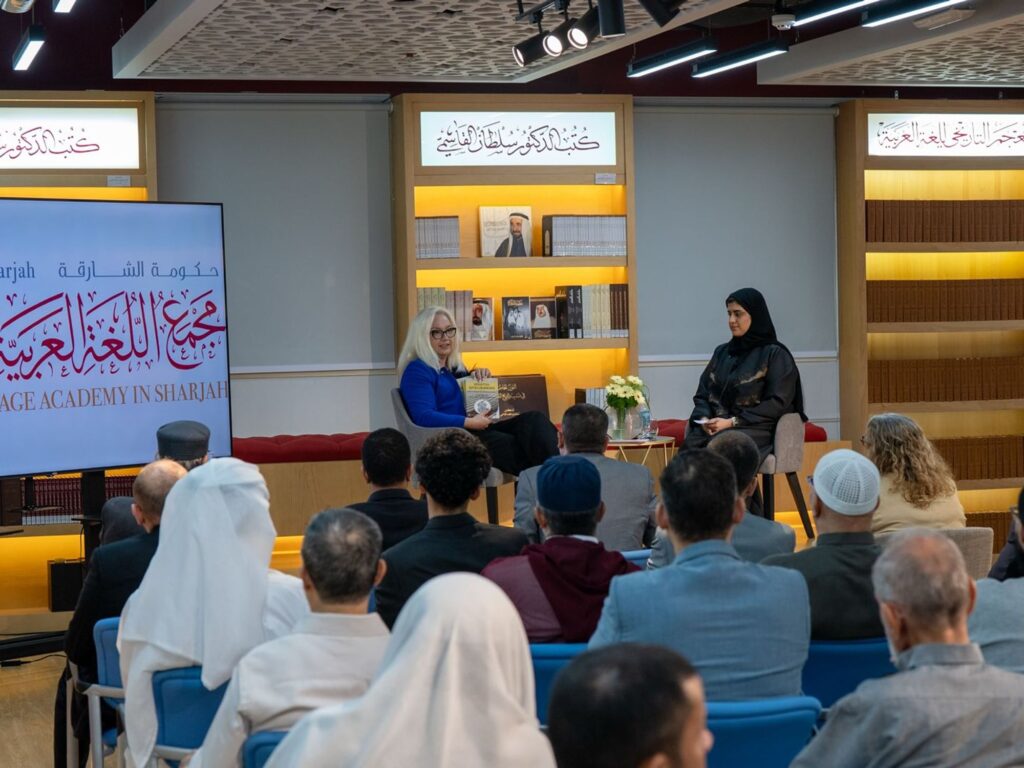
The Arabic Language Academy in Sharjah has convened scholars and educators to examine how Arabic instruction flourishes in Europe and how institutional collaboration might deepen understanding between cultures.
The Arabic Language Academy in Sharjah has brought together an assembly of distinguished academics, educators and language enthusiasts to explore the expanding landscape of Arabic education across Europe. The twelfth gathering of the academy’s language majlis, titled “Arabic in Europe: Reality and Aspirations”, examined the contemporary teaching of Arabic to non-native speakers and envisioned pathways through which Arab and European institutions might work in closer concert.
Dr Mohamed Safi Al Mosteghanemi, Secretary-General of the academy, articulated the institution’s noble purpose: to unite admirers of the Arabic language across the globe, to study methodologies of language instruction, and to draw upon the accumulated wisdom of its scholars. He emphasised that the academy, guided by the vision of His Highness Sheikh Dr Sultan bin Mohammed Al Qasimi, Supreme Council Member and Ruler of Sharjah, endeavours to generate knowledge of enduring utility, to support those who dedicate themselves to teaching Arabic, and to illuminate solutions to the challenges educators encounter.
The majlis drew particular insight from Poland’s considerable experience in instructing Arabic to those for whom it is not their native tongue. The discussion examined how the language serves as a bridge of comprehension between Arab and European societies, dispelling misconceptions and fostering a richer appreciation of Arab culture and civilisation.
Dr Magdalena Lewicka, a distinguished Polish scholar of Arab and Islamic studies, shared her personal odyssey with the language. Over more than three decades, she has moved from mastering the letters and discovering literary treasures to guiding numerous students through Arabic texts. She described learning Arabic as an intimate dialogue with a culture of remarkable sophistication, a literature of extraordinary richness, and a history of profound significance. The language, she reflected, became her gateway to understanding the Arab world and proved itself a conduit through which cultural barriers might dissolve.
Dr Lewicka advanced several proposals to strengthen Arabic education across Europe. She called for substantive collaboration between academic centres in Poland and the Arab world, facilitated through the sharing of knowledge and research. She advocated for regular international scholarly conferences that would gather these institutions to address common pedagogical challenges. She further recommended bilateral exchanges enabling Polish students to pursue Arabic studies at centres throughout the Arab world, and offering teachers opportunities for professional development.
To sustain this intellectual dialogue, Dr Lewicka proposed the establishment of a digital platform linking institutions across Poland and the Arab world, permitting continuous exchange of ideas and experience. Arabic language and literature may be pursued as degree programmes in three Polish universities, with additional instruction available at numerous state and private institutions.
Dr Lewicka observed that learning Arabic transformed her perception of the world. In her early encounters she confronted deeply embedded stereotypes, an experience that cultivated in her a profound humility and intellectual openness. She now guides her own students through this formative process, accompanying them to the profound centre of Arab culture and revealing to them the true, abundant and multifaceted character of the Arab world. The metaphors and human truths woven through Arabic texts became her inspiration to share their beauty with successive generations of learners.
Source: WAM